
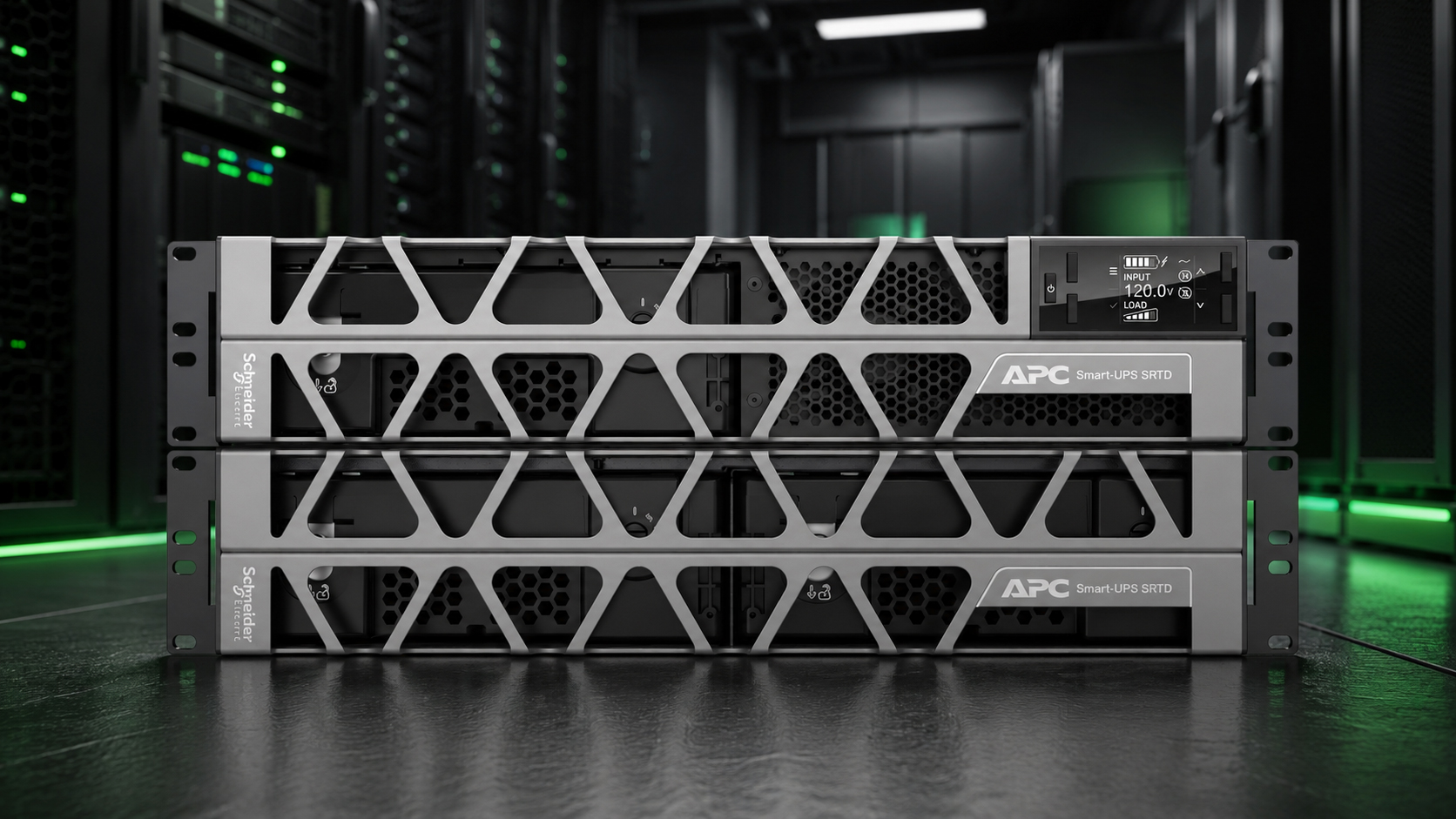
What APC Multi-Chemistry Means for Your Customers—and Your Business
A UPS refresh has traditionally forced customers to make a long-term battery decision at the very beginning of the buying process.
They could choose the lower upfront cost of valve-regulated lead-acid (VRLA) batteries or invest more in longer-lasting lithium-ion technology. Whichever option they selected, however, was tied to that UPS.
Changing battery technologies later generally meant replacing the entire UPS.
The next generation of APC Smart-UPS changes that equation. Schneider Electric’s new multi-chemistry platform supports both VRLA and lithium-ion batteries within the same UPS chassis and is engineered to accommodate additional compatible battery chemistries as they become available.
For customers, that means greater flexibility and a more practical modernization path. For you, it creates new opportunities to support customers throughout the life of their power infrastructure.
Customers Can Modernize on Their Terms
Not every customer is prepared to make the same investment today.
Some may prefer VRLA batteries because they offer a cost-effective way to address an immediate backup-power requirement. Others may be ready to invest in lithium-ion batteries for their longer service life and reduced maintenance requirements.
With the new multi-chemistry APC Smart-UPS, those decisions no longer have to permanently define the UPS.
A customer can deploy the platform with VRLA batteries today and transition to compatible lithium-ion batteries when the original batteries require replacement. The battery chemistry can change without replacing the UPS chassis.
That flexibility can be especially valuable for organizations balancing current budget limitations against longer-term infrastructure plans. Instead of delaying a necessary UPS refresh or paying for capabilities they are not ready to adopt, customers can choose the battery technology that fits their present requirements while preserving a path forward.
A Longer-Term Customer Conversation
The initial UPS sale is only one point in the power-infrastructure lifecycle.
Batteries age. Equipment requirements change. IT environments expand. New locations open, workloads increase, and customers gradually gain a clearer understanding of the operational costs associated with downtime.
According to CRN’s coverage of the launch, VRLA batteries typically provide a service life of approximately three to five years, while lithium-ion batteries may last approximately eight to ten years.
That difference gives you a natural opportunity to revisit the customer’s requirements when a battery replacement approaches.
Instead of treating the replacement as a routine cartridge transaction, you can help the customer evaluate several questions:
- Does the current battery technology still meet the customer’s needs?
- Would lithium-ion provide a better long-term operating model?
- Has the critical IT load changed since the UPS was installed?
- Does the customer need additional runtime or external battery packs?
- Are there other aging UPS systems or power distribution units within the environment?
- Would centralized monitoring reduce the risk of an unexpected battery failure?
These conversations position you as a lifecycle advisor rather than simply an equipment supplier.
New Upgrade and Service Opportunities
The multi-chemistry platform creates several ways for you to deliver value after the initial deployment.
Infrastructure Assessments
Many customers lack a complete picture of the UPS systems supporting their distributed IT environments. This is particularly common across schools, healthcare facilities, retail locations, branch offices, light-industrial sites and organizations with multiple network closets.
You can help inventory the installed power infrastructure, assess battery health, identify aging equipment and establish priorities for replacement or modernization.
Battery Upgrades
When a customer’s VRLA batteries approach the end of their useful life, you can help determine whether replacing them with compatible lithium-ion batteries makes financial and operational sense.
Because the UPS chassis does not also need to be replaced, the conversation can focus on the value of the battery upgrade rather than the cost and disruption of purchasing an entirely new UPS.
Monitoring and Lifecycle Management
Battery failure remains one of the leading causes of UPS failure. Waiting for an alarm, outage or failed self-test is not an effective lifecycle strategy, especially when equipment is distributed across numerous sites.
EcoStruxure IT provides centralized visibility into UPS health, performance, battery status, alerts and energy use. You can use that visibility to help customers move from reactive equipment replacement toward proactive lifecycle management.
That visibility is especially valuable at edge and distributed locations where equipment may operate without dedicated IT personnel on site. Instead of physically visiting every network closet or branch location, customers and their technology partners can monitor battery condition and UPS performance remotely.
Refresh and Recycling Support
Replacing aging batteries and UPS equipment also creates logistical and environmental challenges. Customers may need assistance removing old equipment, responsibly recycling batteries and coordinating refresh projects across multiple locations.
Helping manage that process can make modernization easier while strengthening the customer relationship.
More Than a Battery Upgrade
Multi-chemistry support may be the platform’s defining innovation, but the next-generation APC Smart-UPS also delivers significant improvements in power, runtime, density and manageability.
Those improvements become increasingly important as distributed and edge environments support more data-intensive applications, cloud services and AI-driven workloads. Customers need reliable power infrastructure capable of supporting growing compute requirements without consuming additional rack space.
As ARC Advisory Group notes in its coverage, higher-density computing requirements and the continued growth of edge infrastructure are increasing the need for reliable power, operational visibility and remote management across distributed environments.
According to Schneider Electric’s announcement, the new platform provides:
- Up to three times the base runtime
- Up to 1.4 times greater power density
- Up to 57% more outlets
- Up to 40% less power loss
- Support for as many as 10 external battery packs
A standardized design across battery types and kVA models also means shared interfaces, batteries and spare parts. That can simplify training, inventory planning and ongoing support for both partners and customer IT teams.
EcoStruxure IT monitoring software adds visibility across distributed environments, while an EcoStruxure IT Network Management Card provides cybersecurity protection certified to IEC 62443 Security Level 2. PowerChute software can also initiate automated shutdown procedures to help protect data and equipment during extended outages.
Extending the life of the UPS chassis can also reduce equipment replacement and electronic waste while allowing customers to introduce newer battery technologies incrementally.
Starting With the SRTD On-Line Series
The new platform debuts with the SRTD On-Line 2.2kVA and 3kVA models, designed to protect servers and networking equipment in distributed IT, edge, medical, light-industrial and IT white-space environments.
The SRTD series became available to order in North America beginning September 1, 2026, with additional capacity models expected to follow.
For you, the launch provides a timely reason to reconnect with customers whose UPS systems or batteries may be approaching a refresh cycle.
The conversation does not have to begin with a product pitch. It can begin with a simpler question:
“When your current UPS batteries need to be replaced, will your existing systems provide the flexibility to choose what comes next?”
Turn the Next Refresh Into a Larger Opportunity
The next-generation APC Smart-UPS allows customers to address today’s backup-power requirements without closing the door on tomorrow’s battery technologies.
That flexibility helps protect their infrastructure investment, but it also gives you a longer runway for delivering value through assessments, monitoring, battery upgrades, lifecycle planning and responsible technology refreshes.
By helping customers evaluate both their immediate power requirements and longer-term modernization plans, you can turn a routine UPS or battery replacement into a broader infrastructure conversation while reinforcing your role as a trusted technology advisor.
EarthBend Distribution can help you evaluate customer requirements, identify the appropriate APC Smart-UPS configuration and incorporate supporting software and services into the opportunity.
Have a customer with aging UPS equipment or an upcoming battery refresh? Contact your EarthBend Distribution representative to start the conversation.